

 Keith
KeithFeeling stuck is one of the most common emotional symptoms of burnout, yet hardly anyone talks about it. We talk about exhaustion, stress, overwhelm, and anxiety, but the quiet internal freeze is often the first real clue that something deeper is going on.

You wake up and feel indifferent.
You want to move forward, but nothing sparks.
You scroll through your phone hoping for inspiration, but everything feels flat.
You try to motivate yourself, but the engine inside you won’t turn over.
This is the moment when people say, “I’ve lost my mojo.”
It’s frustrating. It’s confusing. And it often makes you question your worth, your purpose, and your capability. But here’s the truth, many people don’t realise: losing your mojo isn’t a personal flaw — it’s a biological response to prolonged overload.
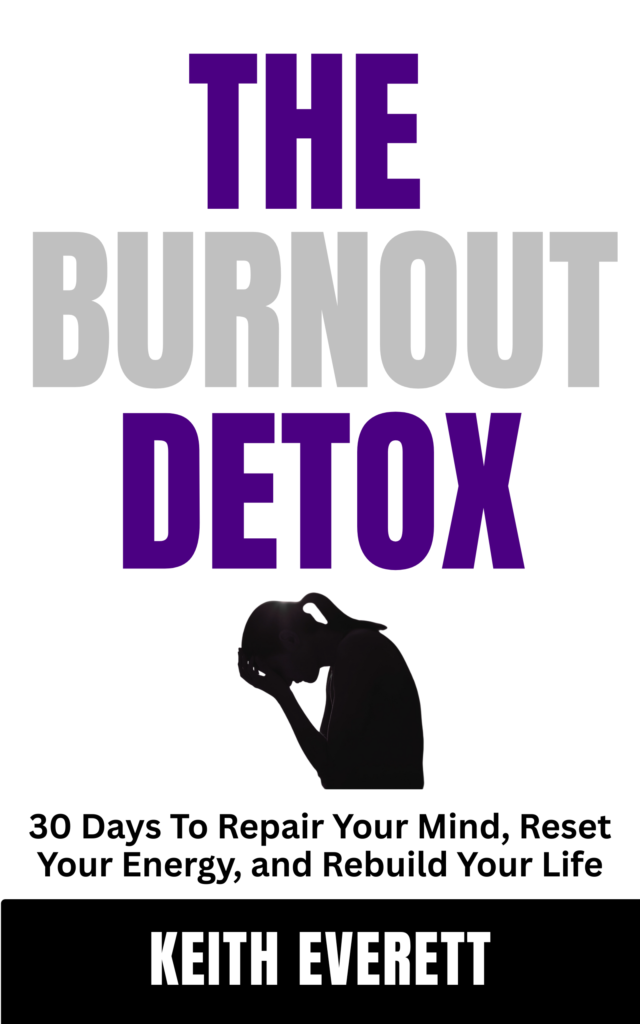
That’s one of the core ideas behind The Burnout Detox. When your system is overwhelmed for too long, it hits the brakes. Not because you’re weak, but because you’re tired, mentally, physically, emotionally, energetically.
If you feel stuck, unmotivated, or detached from yourself, here’s how to start turning things around.
Why Feeling Stuck Doesn’t Mean You’re Broken
One of the cruel tricks burnout plays is convincing you that the stuckness is you, that you’ve become lazy, unproductive, or unambitious. But the truth is much simpler: your system has been running in survival mode, and survival mode shuts down anything that isn’t essential.
Creativity shuts down.
Drive shuts down.
Focus shuts down.
Joy shuts down.
Clarity shuts down.
Your brain is designed that way. It thinks it’s protecting you by conserving energy.
So the first thing to understand is this:
You didn’t lose your mojo. It went dormant. And dormant things can wake up again.
That’s the entire foundation of The Burnout Detox, helping you coax that spark back gently, without pressure.
Step 1: Stop Forcing Motivation
When you’re burnt out, forcing yourself to “just get on with it” doesn’t work. In fact, it makes things worse. Pressure increases resistance. And resistance increases the feeling of being stuck.
The first counterintuitive step to getting your mojo back is this:
Stop trying to feel motivated. Start trying to feel capable.
Motivation is a feeling.
Capability is a pattern.
You rebuild capability through tiny, non-intimidating actions.
Which leads us to the next step.
Step 2: Start With Micro-Movements
When you’re overwhelmed, even simple tasks feel mountainous. That’s why micro-movements are powerful. They bypass the heaviness and give you small wins your nervous system can handle.
Micro-movements might look like:
Wiping down one surface
Taking a 60-second walk
Responding to one message
Drinking a glass of water
Tidying a single drawer
Writing one sentence
These tiny actions do two things:
- They rebuild trust in themselves.
- They create momentum without pressure.
That’s straight from the early chapters of The Burnout Detox — you don’t regain your spark through intensity. You regain it through consistency.
Step 3: Reduce the Noise in Your Head
A noisy, overloaded mind is one of the biggest reasons people feel stuck. Burnout creates constant mental chatter, rumination, worry, and pressure-thinking. When your thoughts are loud, your inspiration has nowhere to land.
A simple, powerful practice is the “mental release.”
Take two minutes and write down everything swirling in your mind, not as a journal entry, as a brain dump.
The moment your thoughts hit the page, your system relaxes.
It realises it no longer has to hold everything at once.
Clarity doesn’t come from thinking harder; it comes from making space.
Step 4: Rebuild Your Emotional Space
When your emotional bandwidth shrinks, small things hit harder and life feels heavier. You might cry more easily, snap unexpectedly, or feel numb.
Your mojo hasn’t vanished — it’s been crowded out by emotional overload.
A practical way to open space again is to name what you’re feeling without judging it.
“I feel overwhelmed.”
“I feel flat.”
“I feel disconnected.”
“I feel pressure.”
Naming emotions doesn’t solve them, but it softens them. And softened emotions make room for curiosity, interest, and eventually, motivation.
Step 5: Reduce Your Life’s “Volume Setting”
Burnout makes everything feel louder: responsibilities, conversations, notifications, decisions. When the world feels too noisy, your mind shuts down to cope.
To restore your spark, you need to turn the volume down periodically.
This might look like:
Turning off notifications for an hour
Saying no to a non-essential request
Ending your day on purpose instead of collapsing
Spending five minutes in silence
Choosing one thing to delay without guilt
These small boundaries give your system the breathing room it needs to heal. When your life becomes quieter, your inner spark gets louder.
Step 6: Reconnect With Small Joys
One of the biggest misunderstandings about burnout is thinking joy should just “come back.” But joy is a responsive emotion; it appears when your system feels safe enough to experience it.
Start with small joys:
One song you love
Five minutes of sunlight
A warm drink
A clean corner of your home
A video that makes you laugh
Chocolate…
These aren’t trivial.
They’re part of the reawakening.
In The Burnout Detox, this is where people feel their first turning point, when joy, curiosity, and a sense of aliveness begin to return.
Step 7: Focus on What Truly Matters
When you’ve lost your mojo, everything feels equally heavy. That’s because burnout blurs your internal compass. You don’t know what matters any more, and that’s okay.
The path back is simple:
Identify which actions genuinely move your life forward. Focus on those. Release the rest.
This is where the 80/20 idea comes in, but even before that, the question is straightforward:
“What’s one thing that matters today?”
Not five. Not ten. One.
Your spark grows when you feed the right things.
Final Thoughts: Your Mojo Isn’t Lost — It’s Waiting
Feeling stuck is temporary.
Feeling unmotivated is a signal, not a sentence.
The spark you’re missing is still inside you; it’s just buried under exhaustion, pressure, and noise.
With small, gentle steps, you can uncover it again.
And if you want a complete step-by-step path to go deeper, the 30-day programme inside The Burnout Detox walks you through the entire process with clarity, structure, and compassion.
Whenever you’re ready, the next step is waiting.
Have a great day
Keith
P.S. If this post resonated with you, leave a comment below and share the post. You may know someone else, a friend or family member, who is going through a hard time and needs to see this information right now.
PPS Check out our Etsy store..
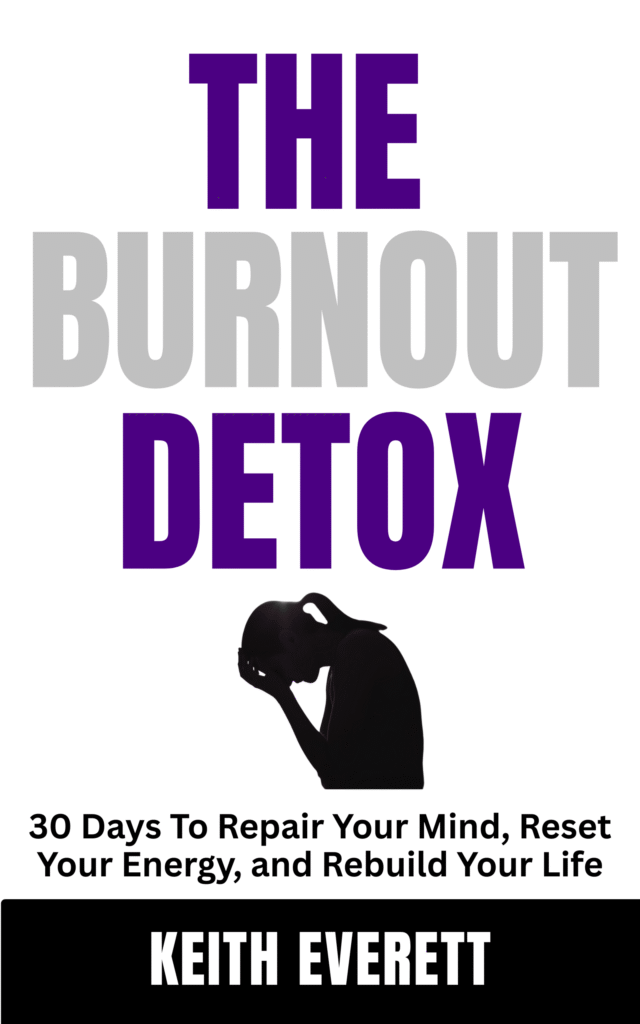
Get your copy of The Burnout Detox here, or click the image below


















Add comment