
 Keith
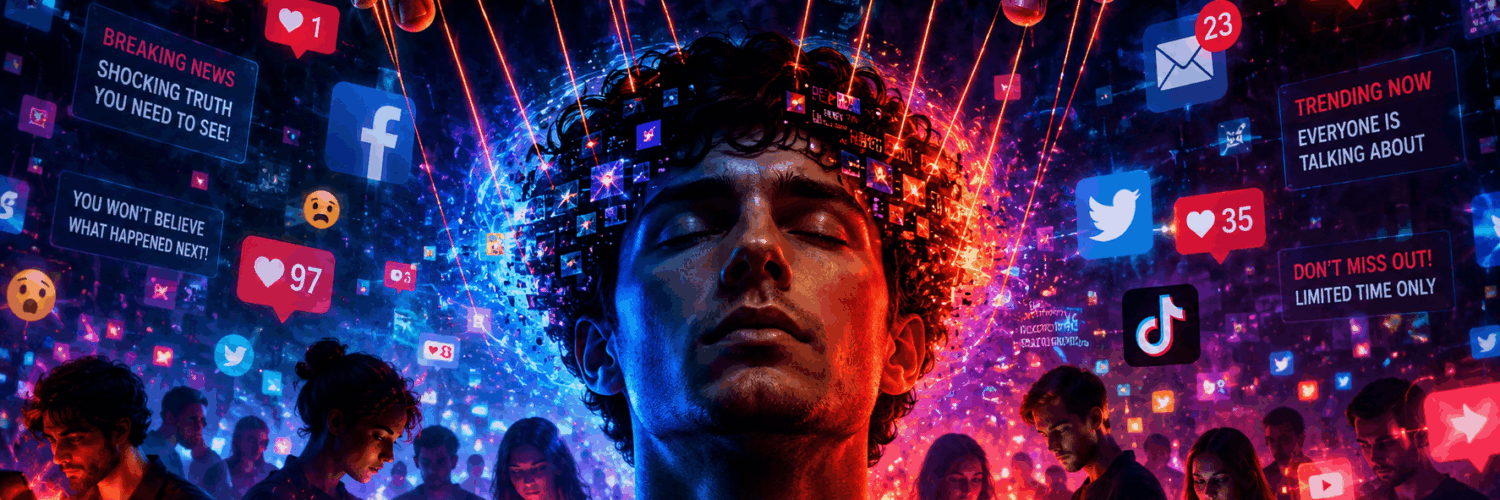
KeithWho Really Owns Your Thoughts?
You wake up.
Before you’ve even climbed out of bed, your hand reaches for your phone.

A quick look at the news.
A glance at social media.
A couple of messages.
An email.
A video that somehow knows exactly what you’ll want to watch next.
Five minutes becomes twenty.
The day has already begun, yet someone else has decided what occupies your mind first.
Sound familiar?
Now ask yourself something.
How many of the decisions you make each day are truly your own?
It’s a surprisingly difficult question to answer.
We like to think we’re independent. We choose what to watch, what to read, what to buy and what to believe.
But do we?
Or are many of those choices quietly influenced long before we realise we’ve made them?
That’s not a conspiracy theory.
It’s simply how the modern world works.
Welcome To The Attention Economy
There was a time when companies competed for your money.
Today, they compete for something far more valuable.
Your attention.
Every notification.
Every headline.
Every recommendation.
Every autoplay video.
Every “You might also like…”
They’re all competing for the same thing.
A few more seconds of your day.
Because once they have your attention, everything else becomes easier.
Selling.
Advertising.
Influencing.
Persuading.
Your attention has become one of the most valuable resources on the planet.
And almost all of us give it away for free.
The World’s Greatest Magicians
The best magicians don’t make things appear.
They make you look somewhere else.
While you’re watching one hand…
The trick happens with the other.
Distraction has always been powerful.
The difference today is scale.
Never before have billions of people carried a device in their pocket capable of interrupting their thoughts dozens of times a day.
Most of us don’t even notice it anymore.
The buzz.
The beep.
The vibration.
The glowing screen.
Each interruption seems insignificant.
Together, they reshape our days.
Are You Choosing… Or Being Guided?
Open almost any app.
You’ll be shown something chosen specifically for you.
A video.
A song.
A product.
A news story.
Another video.
Another recommendation.
Another opinion.
You didn’t search for most of it.
It arrived first.
That’s the remarkable thing about modern technology.
It doesn’t just respond to what we choose.
It constantly suggests what we should choose next.
Sometimes those suggestions are genuinely useful.
Sometimes they’re simply profitable.
The challenge is knowing the difference.
The Comfort Of Agreement
Most of us enjoy hearing opinions that confirm what we already believe.
It’s reassuring.
Comfortable.
Human.
But if we’re rarely exposed to thoughtful disagreement, something subtle can happen.
We stop questioning our own assumptions.
Not because we’re incapable of thinking critically.
But because we rarely have to.
It’s easy to feel informed when almost everything you see reinforces your existing views.
The harder task is remaining curious.
When Did Silence Become So Difficult?
Think about the last time you stood in a queue.
Or sat on a train.
Or waited for someone in a café.
Did you simply wait?
Or did your hand instinctively reach for your phone?
Many of us have forgotten what it’s like to be alone with our own thoughts.
Every spare moment becomes another opportunity to consume something.
Another headline.
Another reel.
Another podcast.
Another notification.
Yet some of humanity’s greatest ideas were born in moments of uninterrupted reflection.
What are we losing when every quiet moment is filled?
Predictable People
Technology companies don’t need to know what you’re thinking.
They only need to know what you’re likely to do next.
Patterns emerge remarkably quickly.
What catches your eye.
How long you watch.
When you lose interest.
What makes you click.
What makes you buy.
What keeps you coming back.
That’s not mind-reading.
It’s pattern recognition.
And humans, it turns out, are creatures of habit.
The more predictable our habits become, the easier they are to anticipate.
The Questions Worth Asking
Perhaps the real issue isn’t technology.
Technology has brought extraordinary benefits.
The question is whether we’ve become conscious of how we use it.
Or whether it has quietly become something that uses us.
Who benefits when we’re constantly distracted?
Who profits from keeping us engaged for just a little longer?
Why are some platforms designed to be difficult to leave?
Why does an hour online often feel like ten minutes?
And perhaps the most uncomfortable question of all…
When was the last time you spent an entire hour thinking about your own life without looking at a screen?
Take Back Your Attention
Independent thought rarely arrives in the middle of endless distraction.
It needs space.
Silence.
Reflection.
Books instead of headlines.
Long conversations instead of comment sections.
Walking without headphones.
An evening without notifications.
None of these things are dramatic.
But together they help us reclaim something precious.
Our attention.
Because attention shapes time.
Time shapes habits.
Habits shape lives.
And if you can consciously decide where your attention goes…
You’ve already taken back far more control than most people ever realise.
Perhaps that’s the real question this article has been asking all along.
Not…
“Who owns your thoughts?”
But…
“Who owns your attention?”
Because the answer to that question may determine far more than you think.
If this article has made you pause for a moment, then it has done its job. We live in a world where almost everyone is competing for our attention, yet very few of us stop to ask where that attention is actually going. Sometimes the most important discoveries begin with a single uncomfortable question.
If this post resonated with you, why not give it a like and leave a comment below?
Have a great day.
Keith
P.S. If you enjoyed this article, you may also enjoy my book The Book of Dark Psychology, where I explore the hidden influences, psychological techniques and subtle methods of persuasion that shape human behaviour. It isn’t about telling you what to think—it’s about helping you recognise when someone else may be trying to do it for you.












Add comment