
 Keith
KeithSo, what is the most dangerous question?
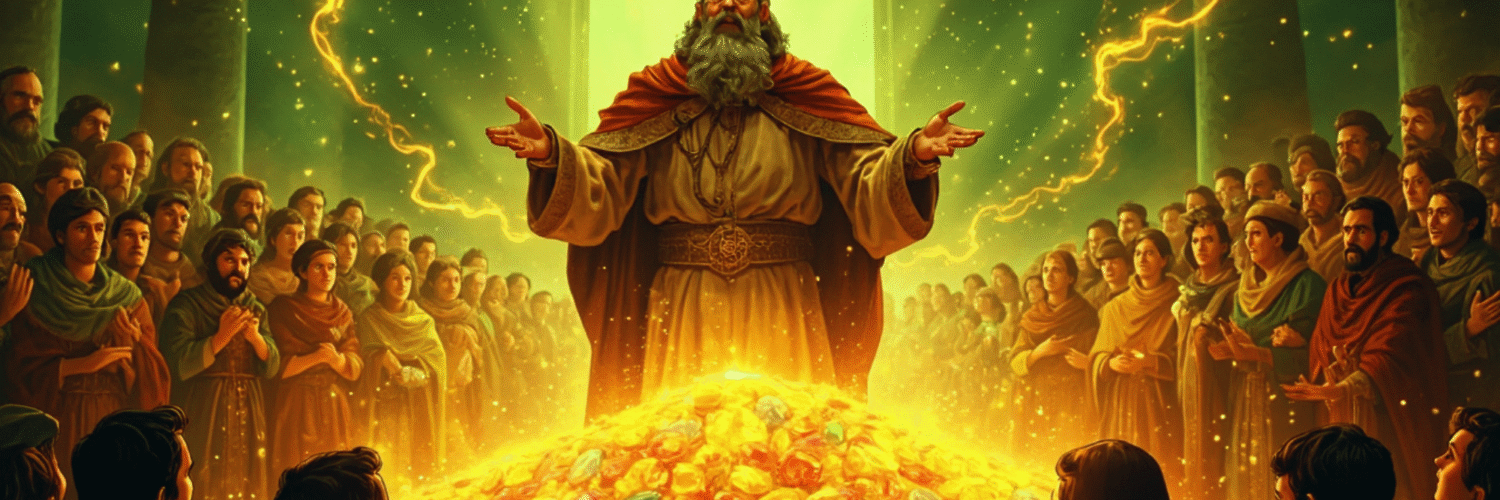
“What if everything I was taught about money is a lie?”

That question is dangerous because it unravels the entire script you were trained to follow.
It forces you to confront the possibility that:
- Hard work alone doesn’t create wealth
- School never taught you how money actually works
- Job security is often just dependency in disguise
- Saving your way to freedom is mathematically impossible
- The wealthy play by rules most people don’t even know exist
Once you ask that question, you can’t go back to pretending.
Let’s continue..
Let’s be honest for a moment. Not polite. I mean the kind of honesty that rattles the furniture in your mind. Wealth isn’t complicated. It never was. Yet most people treat it like a treasure map written in a language only the chosen few can read. They search for secrets in old books, quote gurus they don’t understand, and dream big dreams that never make it past the pillow.
The truth is far less glamorous. Wealth is brutally simple. Not easy, but simple. And for many, that simplicity is precisely what makes it uncomfortable.
People want richness served warm and painless. They want transformation without sacrifice, praise without pressure, freedom without friction. They work a little, complain a lot, and wonder why their lives never shift. They decorate their wishes with quotes, affirmations, and hope… but life doesn’t bend to hope. It bends to principle. It bends to power. It bends to those willing to face reality instead of fantasising about it.
Niccolò Machiavelli understood this centuries ago. He didn’t study comfort. He studied human nature. He watched how people behave when things are easy and when things are dangerous. And he saw something we still refuse to admit: the world doesn’t reward the most deserving. It rewards the most deliberate. Wealth follows intention backed by courage, not wishes wrapped in fear.
So let’s strip the illusion bare.
Most of what you’ve been taught about money is designed to keep you manageable. Predictable and Docile. A person who wakes up at the same time every day, performs the same tasks, scrolls through the same feeds, and follows the same routine is easy to control. They’re told to work hard and wait patiently, as if patience were ever a wealth strategy. They save a sliver of a paycheck, cling to job security, and pray the system remains kind. But systems aren’t kind. They’re strategic. And that strategy has never included making you rich.
You weren’t educated. You were domesticated.
That’s the part people don’t want to hear. But it’s the part that unlocks everything.
The wealthy don’t think like workers. They don’t trade time for money because time evaporates the moment you spend it. They trade value. They trade ownership. They trade leverage, the ability to multiply effort through systems, products, content, teams, and tools. The poor are taught to survive. The wealthy learn to scale.
Imagine two people starting in the same city, the same year. One plays life safe. Clock in, clock out, save a little, hope a lot. Ten years later, he experienced fatigue and a bank account that barely kept pace with inflation. The other spends those same years studying markets, building small offers, selling, failing, adjusting, and expanding. Ten years later, he owns assets, not hours. He holds freedom, not fear. The difference wasn’t intelligence or luck. It was perspective.
And perspective is everything.
But here’s why most people never make the shift: fear. The kind of fear that feels reasonable. The fear of looking foolish. The fear of breaking the script. The fear of stepping out of line. But the line they cling to isn’t a path to prosperity; it’s a conveyor belt leading to a lukewarm retirement cake and a pension that dissolves the moment inflation breathes on it. They call it stability. But stability is often just slow death wearing a gentle face.
The wealthy understand a different truth: risk isn’t the enemy. Risk is the doorway. Boldness is the key. Not recklessness, but deliberate boldness. Machiavelli said fortune favours the bold, and he meant the ones who walk into uncertainty with strategy instead of superstition.
And yet even when people know better, they stay stuck. Why? Because they confuse activity with advancement. They hustle in circles. They move fast and go nowhere. Like Hamsters, they don’t get rich from going around in circles. They get tired. And so do most people.
Wealth doesn’t come from motion. It comes from direction. From knowing how money flows and placing yourself in that current instead of hoping it splashes on you. The wealthy build canals. They build pipelines. They build systems that redirect the river straight into their land.
It’s not magic. It’s engineering.
And once you understand that wealth is really about controlling human desire, attention, identity, and perception, you begin to see the world differently. The wealthy don’t sell things. They sell meaning. They build magnetism. And magnetism, once built, pulls money toward it like metal to a magnet.
But magnetism comes with a price. When you rise, expect resistance. Expect whispers. Expect resentment from the very people who never dared to rise themselves. Machiavelli warned that power invites opposition. Wealth does too. You’ll be judged for the courage others abandoned, criticised for the risks they refused, and envied for the freedom they feared to pursue.
That’s the toll you must pay.
But what waits beyond that gate is real freedom. Not the pretend freedom of weekends and vacation days. The kind of freedom that lets you choose your hours, your direction, your destiny. The kind of freedom that allows you to say no without trembling.
Still, building wealth is only half the battle. Keeping it is an entirely different war. Money burns anyone who handles it recklessly. That’s why the wealthy don’t chase status; they chase strategy. They protect their assets the same way a ruler protects a kingdom: with structure, contracts, boundaries, and discernment.
Because money without protection is simply money preparing to leave.
And once you’ve built the fortress, once wealth arrives, you face the final truth: money doesn’t fix you. It amplifies you. If you were lost before, you’ll be lost with money. If you lacked discipline before, you’ll self-destruct faster. Wealth reveals what comfort hides.
So understand this: real wealth is control. Control of your time, your choices, your mind. The ability to shape your life instead of reacting to it. Machiavelli believed that a true ruler thinks not only of today but also of their legacy, what remains when they’re gone, what echoes after their voice fades.
Legacy is the ultimate wealth. Not the money you spend, but the empire you leave—ideas, assets, systems, opportunities. Something your bloodline can stand on.
But none of it begins until you break the script you were handed. Until you stop waiting for rescue. Until you stop whispering “someday” and decide that today is the day you start building like your life depends on it.
Because it does.
Wealth was never complicated. It was just brutally simple. And the moment you accept that simplicity, you stop living as a spectator and start living as a creator. The script ends. Your story begins.
Have a great day
Keith
P.S If this post resonated with you, give it a share, and do leave a comment below
PPS. The Legacy Code is a modern-day adaptation of Machiavelli’s teachings. Grab your copy here.











Add comment