

 Keith
Keith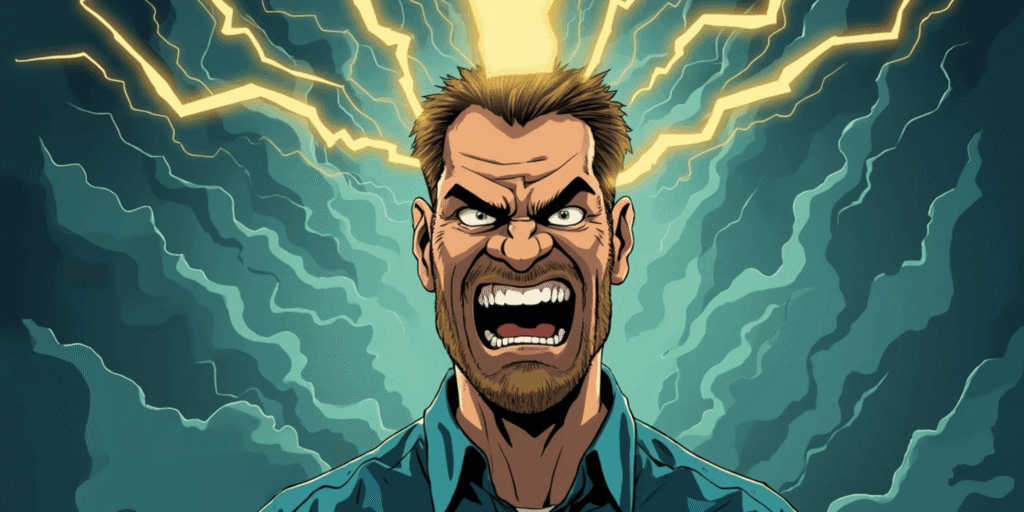
There is a quiet game playing out inside your head every single day.
No audience. No referee. No obvious rules.
Just a running commentary that never seems to stop.
You replay conversations. You anticipate disasters. You criticize yourself for things no one else even noticed. And when you get something wrong, or think you did, the internal judge arrives instantly, and we start beating ourselves up.
Most people assume this is normal behaviour. Just “how the brain works.”
But what if that voice is not neutral… not harmless… and not even entirely yours?
If you have ever searched for how to stop negative thoughts about yourself, why do I overthink everything, or how to silence your inner critic, you are already sensing that something deeper is happening.
And this is precisely where the ideas explored in The Book of Dark Psychology become unsettlingly useful.
Because the most powerful manipulation you will ever experience rarely comes from other people.
It comes from inside your own mind.
The Brain Loves Certainty — Even When It Hurts You
Your brain’s primary job is not happiness. It is survival.
And survival, from a biological perspective, means scanning for threats, mistakes, and potential embarrassment. It would rather you feel anxious than relaxed, even if there is the slightest chance of danger.
Unfortunately, modern life contains far fewer predators, but far more imagined catastrophes.
So the brain fills the gap.
It invents worst-case scenarios. It replays awkward moments from 10 or 20 years ago as though they happened yesterday. It assumes people are judging you even when they are too busy worrying about themselves to even notice.
This is why so many people struggle with how to stop overthinking at night or how to stop negative self talk permanently.
You are not broken. You are simply listening too closely to a system designed for a very different world.
The Self-Punishment Loop
Here is where the game becomes truly cruel.
First, the brain generates anxious or critical thoughts. Then you judge yourself for having them.
“I shouldn’t think like this.”
“Why am I so weak?”
“Other people don’t struggle like this.”
Now you are not only dealing with the original worry, but also a second layer of shame.
It is like being stabbed and then criticized for bleeding.
The Book of Dark Psychology explains how this loop keeps people mentally trapped. The more you fight the thoughts, the more attention you give them. The more attention you give them, the stronger they become.
Resistance feeds them. Self-criticism fuels them. Silence makes them echo louder.
The Illusion That Thoughts Are Facts
One of the most dangerous assumptions we make is that thoughts are meaningful simply because they appear.
But thoughts are more like weather than wisdom. They arise, pass through, and then disappear unless you grab them and build a house around them.
If you have ever wondered why your brain makes up worst case scenarios, consider this: your mind is not predicting the future. It is rehearsing possibilities.
Unfortunately, it has a strong preference for dramatic ones.
The key shift is recognizing that not every thought deserves a response.
Some deserve a polite nod… and then complete disregard.
If you are beginning to recognize these patterns in yourself, you will likely find the deeper breakdown in The Book of Dark Psychology both eye-opening and oddly comforting. It reveals how subtle mental conditioning, emotional triggers, and hidden manipulation tactics, including self-manipulation, shape behaviour far more than most people realise.
Understanding the mechanics does not make you cynical. It makes you free.
Why We Beat Ourselves Up For Getting It “Wrong”
Perfectionism is not really about excellence. It is about fear.
Fear of rejection. Fear of embarrassment. Fear that one mistake will permanently define you.
So the brain adopts a brutal strategy: criticize yourself first, before anyone else can.
If you destroy your own confidence, at least you are in control of the damage.
But this strategy backfires spectacularly. It does not protect you. It trains you to associate action with pain.
Over time, you hesitate more. Avoid more. Doubt more.
And then you criticize yourself for that too.
A Technique From The Book: Label, Don’t Argue
One method discussed in The Book of Dark Psychology is deceptively simple.
Instead of debating with your thoughts, label them.
“Anxiety talking.”
“Catastrophizing.”
“Old programming.”
“Fear response.”
Labeling creates distance. Distance reduces emotional charge. And once the charge drops, the thought loses its authority.
You are no longer inside the storm. You are observing it.
Additional Strategy Not In The Book: Change The Channel
Your mind is not a courtroom where every thought must be cross-examined. It is closer to a radio.
If an unpleasant station is playing, you do not analyze the lyrics for hours. You change the channel.
Movement helps. Music helps. Conversation helps. Physical activity helps even more.
The brain cannot sustain intense negative chatter when your attention is fully engaged elsewhere.
Action disrupts rumination.
Another Hidden Lever: Sleep and Physiology
Many people try to solve psychological problems purely with thinking, which is like trying to repair a car engine by talking to it.
Fatigue amplifies negativity. Hunger increases irritability. Lack of sunlight lowers mood.
Sometimes the most effective “mindset technique” is a glass of water, a proper meal, and a walk outside in the sunshine. Nature’s medicine is all around us, and at times, can be extremely effective.
The Quiet Power of Self-Compassion
Self-compassion is often misunderstood as weakness. In reality, it is strategic resilience.
When you treat yourself with patience instead of hostility, you recover faster from mistakes. You take risks more easily. You stop wasting energy on internal battles.
Imagine how differently you would perform if your inner voice sounded like a wise mentor instead of a sarcastic critic.
You would still improve. You would simply suffer less while doing so.
Final Thought: The Real Opponent Is Invisible
The most significant struggles in life rarely involve other people. They involve the narrative running in your own head.
If you learn to question that narrative, to step back from it, to stop punishing yourself for being human, you gain a form of freedom most people never experience.
And once you understand the hidden mechanisms behind these mental games, many of which are explored in depth in The Book of Dark Psychology — you begin to see that your thoughts are not your master.
They are just noise.
Sometimes useful. Often misleading. Always temporary.
You do not have to win every argument with your mind.
You only have to stop believing it is always right.
If this post resonated with you, why not give it a like and leave a comment below?
Have a great day.
Keith
P.S. Why not check out our Digital Bookstore?. Our books are designed to help you grow, transform, and elevate your life.
PPS. Check out our YouTube channel, too.











Add comment