

 Keith
KeithWe’ve all had that moment. You’re in a conversation, nodding along, and the other person is saying all the right words. But something feels wrong. The smile doesn’t match the tone. The “I’m fine” doesn’t sound fine at all. Deep down, you know there’s more going on than the words reveal.
Most people ignore that feeling. Later, they regret it. But here’s the truth: what we call intuition is really just noticing signals that most people miss. The way someone moves. The shift in their voice. The look on their face for a fraction of a second before they cover it up.
Once you know how to spot those signals, it’s like putting on X-ray glasses. You’ll see through the words and dive straight into the truth.
So how do you do it?
Start with the baseline. Everyone has their own “normal.” Some people talk quickly, others slowly. Some make constant eye contact, others don’t. Before you can read anyone, you need to know what their natural state looks like. Pay attention when they’re relaxed, that’s your baseline.
Look for alignment. Honest communication lines up across three channels: words, voice, and body. If someone says “I’m excited” but their tone is flat and their shoulders slump, the alignment is broken. The words don’t match the truth.
Watch the face. The face leaks information through tiny flashes called micro-expressions. A half-second frown, a quick tightening of the lips, or a smile that never reaches the eyes, these are signals that reveal real emotion before the mask returns.
Notice the body’s little soothers. When people are stressed, they rub their neck, tap their fingers, or fidget with jewellery. These pacifying movements are the body’s way of coping. A sudden freeze can be just as telling; when hands go still, it often means someone is holding back.
Listen to the voice. Even without visuals, you can hear the truth. A steady voice usually signals confidence. But when someone speeds up, slows down, drops their pitch, or sighs heavily before answering, their voice is telling you what their words aren’t.
Trust your gut — but verify. Walking into a room and instantly sensing tension is a real experience. Your body picks up signals faster than your mind processes them. The key is not to invent stories, but to use that feeling as a cue to look closer at the evidence.
And here’s the golden rule: never judge based on one single signal. One fidget, one glance, one hesitation means nothing on its own. But when three or four signals line up, you’ve got the truth.
The Mindreading Checklist
Here’s a simple checklist you can carry into any conversation. Think of it as your starter guide to reading people like an X-ray.
1. Establish a baseline.
Before you can judge anything, you need to know how a person normally acts. Notice their usual tone of voice, their natural pace, and their normal level of eye contact when they’re relaxed. If they suddenly change, that shift is your clue.
2. Check alignment.
Ask yourself: do the words match the tone and the body language? If all three line up, it’s usually genuine. If the words say “yes” but the voice drops and the shoulders tense, the truth is out of alignment. That’s where the real story lives.
3. Watch the face.
Look for micro-expressions — those tiny flashes of real emotion that leak out before someone can hide them. A quick frown, a lip press, or a smile that doesn’t reach the eyes can tell you far more than the sentence that follows.
4. Notice self-soothing behaviors.
When people feel stressed or uncomfortable, they often pacify themselves. They rub their neck, tap their fingers, play with jewelry, or cross their arms tightly. One gesture doesn’t mean much, but if these behaviors spike when a certain topic comes up, pay attention.
5. Listen to the voice.
Tone is often more truthful than words. Listen for sudden changes in speed, pitch, or volume. A confident person sounds steady. A hesitant or nervous person sounds uneven, with pauses, sighs, or rushed words.
6. Sense the vibe — but verify.
Sometimes you just feel tension in a room or unease around a person. Don’t ignore it. Use it as a signal to look more closely. Then back it up with visible evidence: What did the body do? How did the voice change? What shifted in the face?
7. Look for patterns, not single signs.
The biggest mistake people make is jumping to conclusions based on one signal. Eye contact alone doesn’t prove honesty or lying. A crossed arm doesn’t always mean defensiveness. But when three or four signals cluster together, the picture becomes clear.
Why This Matters
This isn’t about playing detective to catch people lying. It’s about understanding people better. You’ll know when someone needs comfort, when they’re uncertain, when they’re genuinely excited, and when they’re holding something back.
In business, this helps you cut through surface talk and get to what really matters. In relationships, it helps you connect on a deeper, more authentic level. And in everyday life, it keeps you from being fooled by surface words.
So next time you talk to someone, use this checklist. Watch the signals. Hear the tone. Notice the shifts. Because when you can read people like an X-ray, you stop guessing, and you start to really see the real person. .
Have a great day
Keith
P.S. If you got value from this post, give it a share and leave a comment below.
For more exciting stuff, subscribe to the “Legacy Code” YouTube channel
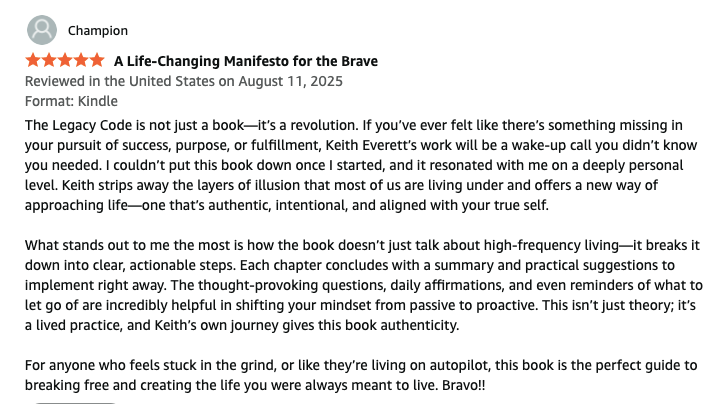
Or check out the Legacy Code book here. Some people have classified this book as “Life Changing”















Add comment