
 Keith
KeithSome revolutions don’t begin in boardrooms. They begin on bar napkins.
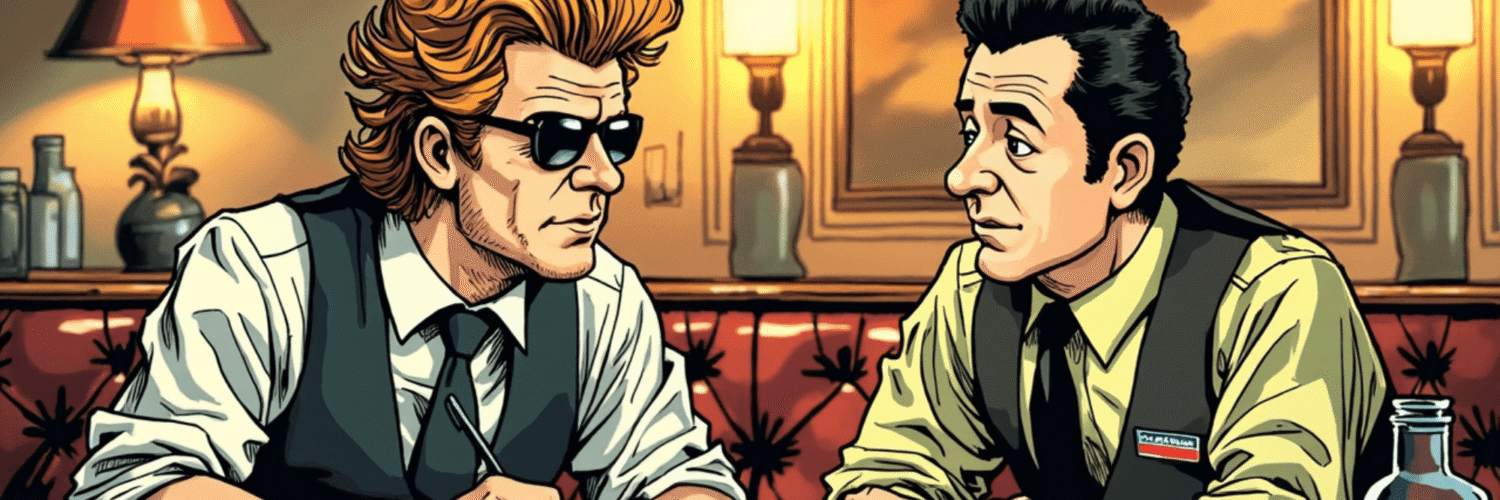
In 1967, in a San Antonio private club, a pilot named Rollin King leaned across the table to his lawyer, Herb Kelleher, and pitched an outrageous idea. Draw three dots: Dallas, Houston, San Antonio. Connect them. Offer fast, cheap flights between them. Keep it inside Texas to dodge the federal red tape strangling the airline industry.
Herb asked how much Rollin had to start. “Fifty dollars,” King said.
Most men would have laughed. Herb didn’t. He grinned. “You’re halfway to $100. Let’s do it.”
That $50 became Southwest Airlines.
Five Years of War Before the First Flight
But before the first ticket could be sold, the big airlines, Braniff, Continental, and Trans-Texas Airways, came for them. Lawsuits. Injunctions. Restraining orders. They dragged Southwest through over 30 legal battles in a span of four years.
Most companies would have folded. Herb fought them in the courts and in the press, often working for free just to keep the dream alive. In December 1970, the U.S. Supreme Court refused to hear the big airlines’ last appeal. Southwest had won its right to fly.
Three Planes, No Money, and a 10-Minute Miracle
In June 1971, Southwest launched with three Boeing 737s. Fares? $20 one-way. But within a year, they were drowning in debt. The solution? Sell a plane to stay afloat… and push the remaining three to perform like four.
That meant unheard-of 10-minute turnarounds at the gate. Staff barely had time to stretch before they were airborne again. It was grueling — but it worked.
The $13 Fare War
In 1973, Braniff tried to kill them with $13 fares on the Dallas to Houston route. Herb’s counterattack? Keep their $26 fare, but include a complimentary bottle of Chivas Regal for every passenger. The stunt made headlines. Braniff surrendered. Southwest turned its first profit that year — $1.6 million.
A Culture You Couldn’t Fake
Herb wasn’t a CEO who hid behind an office door. He dressed as Elvis, arm-wrestled competitors, and sent employees birthday cards in his own handwriting. His philosophy was simple: take care of your people, and they’ll take care of your customers.
By the 1980s, Southwest’s stock ticker was “LUV,” a nod to Love Field and the irreverent warmth that made it stand out in an industry notorious for cold service.
From $50 to Billions
When Herb retired in 2001, Southwest was worth billions, carried over 60 million passengers a year, and had posted decades of uninterrupted profits.
His story is proof that you don’t need deep pockets to change an industry. You need grit. You need to fight. And sometimes… You need a napkin and $50.
If you enjoyed this story, why not share the post and leave a comment below? This helps us continue to provide free, valuable content.
Have a great day
Keith
P.S. Don’t forget to subscribe to our YouTube channel “The Legacy Code” for thrilling stories and life-changing advice.
Or…
Why not get “The Legacy Code” book? The advice in this book, in my view, is priceless.




















Add comment